

「私はステージいくつなんですか……」
がんと告知されたとき、ほとんどの方が気にされる要素が「ステージ」です。「ステージ」という言葉は、ドラマやニュースでがんの進行具合を表すためによく使われるため、「がんといえばステージ」というように、知名度だけが先行している節があります。
でも、ステージは実は、がんの種類ごとに分け方が異なることをご存じでしょうか。
こと乳がんにおいては、ステージは「あなたの乳がんがいま、体のどこまで広がっているか」を表す指標として用いられます。この指標に合わせて治療を決めていると思われがちですが、実はステージはあくまで指標であり、治療方針を決めるための一要素でしかないのです。
この記事では、乳がんのステージを0からⅣまで、そしてステージごとに治療がどう変わるのかを、ブレきゃん流にやさしく整理していきます。
ステージは3つの要素で決まる(TNM分類)
ステージは、3つの要素を組み合わせて決まります。
ステージを決める3つの軸(TNM)
- T(Tumor):しこりの大きさ・広がり
- N(Node):リンパ節への転移の有無・範囲
- M(Metastasis):遠くの臓器への転移の有無
それぞれにT0〜T4、N0〜N3、M0〜M1という細かい区分があり、それを組み合わせてステージ0〜Ⅳが決まります。
ややこしく聞こえますが、ざっくり言うとこんな感じです。
ステージ分類の早見表
もう少し正確に見ると、乳がんのステージは次のように分かれます。「脇の下のリンパ節」は医学用語で腋窩(えきか)リンパ節と呼ばれる、しこりから最初に転移しやすい場所です。
| ステージ | しこりの大きさ・転移の状況 |
|---|---|
| 0期 | 非浸潤癌(がん細胞がミルクの通り道の中にとどまる) |
| ⅠA期 | しこり2cm以下・リンパ節転移なし |
| ⅠB期 | しこり2cm以下・脇の下のリンパ節に微小な転移あり |
| ⅡA期 | しこり2cm超〜5cm以下でリンパ節転移なし/または2cm以下で脇の下のリンパ節に転移あり |
| ⅡB期 | しこり5cm超でリンパ節転移なし/または2cm超〜5cm以下で脇の下のリンパ節に転移あり |
| ⅢA期 | しこり5cm超で脇の下のリンパ節に転移/または脇の下のリンパ節が周りの組織に固定・胸の内側(内胸)のリンパ節に転移 |
| ⅢB期 | しこりが胸の壁に固定、または皮膚にむくみ・ただれ・小さなしこりが散らばる(炎症性乳がんを含む) |
| ⅢC期 | 脇の奥深く(鎖骨の下)や鎖骨の上のリンパ節に転移 |
| Ⅳ期 | しこりやリンパ節の状況にかかわらず、他の臓器に転移あり |
(臨床・病理 乳癌取扱い規約 第18版をもとに作成)
細かく見えますが、大枠は「しこりの大きさ」「脇の下のリンパ節への転移」「他の臓器への転移」の3点で決まっている、と分かれば十分です。
ステージ0(非浸潤癌)
非浸潤癌のことです。ミルクの通り道の中にがんがとどまっていて、まだ管の外には出ていない状態。
ステージ0の特徴
- ミルクの通り道の中だけにあるがん
- リンパ節転移なし、遠隔転移なし
- 5年生存率はほぼ100%(※サブタイプ等で変わります)
- 治療:手術+必要に応じて放射線治療・ホルモン療法
- 抗がん剤は基本的に不要
詳しくは No.1003 浸潤癌と非浸潤癌 をご覧ください。
ステージⅠ
しこりが2cm以下で、いわゆる「早期発見」された乳がんです。ⅠAとⅠBに分かれ、ⅠBは脇の下のリンパ節にごく小さな(微小な)転移があるものを指します。
ステージⅠの特徴
- しこり:2cm以下
- リンパ節転移:なし(ⅠA)、または脇の下にごく小さな転移(ⅠB)
- 遠隔転移:なし
- 5年生存率:約99%(※サブタイプ等で大きく変わります)
- 治療:手術+放射線治療(部分切除の場合)+サブタイプに応じた全身治療
ステージⅡ
ステージⅡは、ⅡAとⅡBに分かれます。早期発見ではありませんが、「早期癌」に分類されます。
ステージⅡの特徴
- ⅡA:しこり2cm以下+脇のリンパ節に少し転移、または2〜5cmで転移なし
- ⅡB:しこり2〜5cm+脇のリンパ節に少し転移、または5cm超で転移なし
- 遠隔転移:なし
- 5年生存率:約95%(※サブタイプ等で大きく変わります)
- 治療:手術+放射線+全身治療(抗がん剤・ホルモン療法・抗HER2療法を組み合わせ)
ステージⅡは、ステージⅠと並んで、日本人の乳がんでもっとも多く診断されるステージのひとつです。
ステージⅢ
しこりの大きさに関わらず、リンパ節転移が多い(または深いリンパ節まで転移している)、または皮膚や胸壁にがんが直接広がっているケースです。ⅢA・ⅢB・ⅢCに細かく分かれます。
ステージⅢの特徴
- ⅢA:しこりが大きく(5cm超)脇のリンパ節に転移、または脇のリンパ節が周りの組織に固定・胸の内側(内胸)のリンパ節に転移
- ⅢB:皮膚や胸壁にがんが直接広がっている、または炎症性乳がん
- ⅢC:脇の奥深く(鎖骨の下)、または鎖骨の上のリンパ節に転移
- 遠隔転移:なし
- 5年生存率:約80%(※サブタイプ等で大きく変わります)
- 治療:基本的に術前抗がん剤からスタート→手術→放射線→全身治療
ステージⅢBとⅢCは「局所進行乳がん」と呼ばれます。手術の前に抗がん剤を行って、しこりを小さくしてから手術するアプローチが標準的です。
ステージⅣ(遠隔転移あり)
骨・肺・肝臓・脳など、乳房から離れた臓器に転移がある状態です。
ステージⅣの特徴
- 遠隔転移:あり(骨・肺・肝臓・脳など)
- 5年生存率:約30〜40%(サブタイプによって大きく異なる)
- 治療:病気を抑えながら生活の質を保つことを目指す(がんとともに生きる)
- 抗がん剤・ホルモン療法・抗HER2療法・分子標的薬・免疫療法など、状況に応じて選ぶ

ステージごとの治療の流れ
乳がんの治療は、「手術」「放射線」「薬物療法(抗がん剤・ホルモン療法・抗HER2療法など)」を組み合わせて行います。ステージによって、その順番と組み合わせが変わります。
手術を先にするか、薬物療法を先にするか
早期の乳がんでは、多くの場合まず手術をして、その後に必要な放射線や薬物療法を行います(手術先行)。一方で、しこりが大きい場合やサブタイプによっては、先に薬物療法でしこりを小さくしてから手術する方法(薬物療法先行)もあります。
非浸潤癌(0期)の流れ
がんが管の中にとどまっているので、手術で取りきれば転移・再発の心配はほとんどありません。
- 範囲が狭い → 乳房部分切除術(+必要に応じてセンチネルリンパ節生検)→ 術後の放射線治療
- 範囲が広い → 乳房全切除術
- 多くの場合、術後の薬物療法は不要。ただしホルモン陽性で乳房を残した場合は、温存した乳房の再発や反対側の乳がんを防ぐ目的で、ホルモン療法を行う選択肢もあります
早期〜ⅢA期の流れ
- しこりが小さい → 乳房部分切除術 → 放射線治療 + サブタイプに応じた薬物療法
- しこりが大きく部分切除が難しい → 乳房全切除術(±乳房再建)。または、先に薬物療法でしこりを小さくしてから部分切除
局所進行(ⅢB・ⅢC期)の流れ
皮膚や胸壁にがんが及んでいたり、鎖骨の上まで転移しているケースです。まず薬物療法でしこりを小さくし、手術が可能になったら手術・放射線などを追加していきます。
遠隔転移(Ⅳ期)の流れ
全身の治療(薬物療法)が中心になります。がんを抑えて、生活の質を保ちながら長く付き合うことを目指します。もとの乳房のしこりに痛みや出血などがあれば、手術や放射線でやわらげることもあります。
センチネルリンパ節生検など脇の手術は No.2005 わきの手術、治療全体の流れは No.2000 乳がん治療のロードマップ で詳しく解説しています。
5年生存率の数字をどう読むか
ステージごとの5年生存率はよく出てくる数字ですが、これを正しく読むには注意が必要です。
たとえば、ステージⅣの方の「5年生存率30〜40%」という数字には、すでにたくさんの臓器に転移していて今にも命を失いそうな状態で見つかった人も、転移は骨の1か所にごく小さいものだけで、その先10年以上生きられている人も、まとめて含まれています。それくらい中身にばらつきのある数字なので、けっして鵜呑みにしてはいけません。
5年生存率を読むときの注意
- これは過去の患者さんのデータ=あなたの未来そのものではない
- 治療は年々進歩しているので、最新の成績はもっと良くなっている
- サブタイプによって数字は大きく変わる
- 同じステージでも、ホルモン陽性とトリプルネガティブでは違う
- 個別のリスクは主治医に確認するのが確実

数字は「全体の傾向」を見るためのもの。あなた自身の予後は、サブタイプ・年齢・体力・治療への反応など、いろんな要素で変わります。
ネットで見た数字に過剰に振り回されないでくださいね。
ステージは手術前後で「変わる」こともある
ステージは、最初の検査時点での「臨床ステージ(cStage)」と、手術後の病理結果を踏まえた「病理ステージ(pStage)」が、別々につけられます。
たとえば、最初は「ステージⅡと思っていた」けど、手術してみたらリンパ節転移が想定より少なくて「ステージⅠでした」となることもあります(その逆もあります)。
なので、最初の数字に一喜一憂しすぎないことも大事です。
ステージだけで治療は決まらない
ステージは治療方針を決めるとても大事な要素ですが、ステージ「だけ」で治療が決まるわけではありません。実際には、次のようなことも合わせて総合的に判断していきます。
ステージ以外に治療を左右するもの
- がんの性質:サブタイプ、悪性度(グレード)、ホルモン受容体やHER2の状況
- 脇の下(腋窩)のリンパ節転移の有無や個数
- 糖尿病や心臓病などの持病、年齢からみた全身の状態
- あなた自身の治療への希望や、大切にしたい価値観
これらは、手術や検査を進めながら少しずつ分かってくることもあります。同じステージでも、人によって治療の中身が違ってくるのはこのためです。
ステージとサブタイプ、どっちが大事?
「ステージ」と「サブタイプ」、両方ともよく聞く言葉ですが、実は両方とも同じくらい大事です。
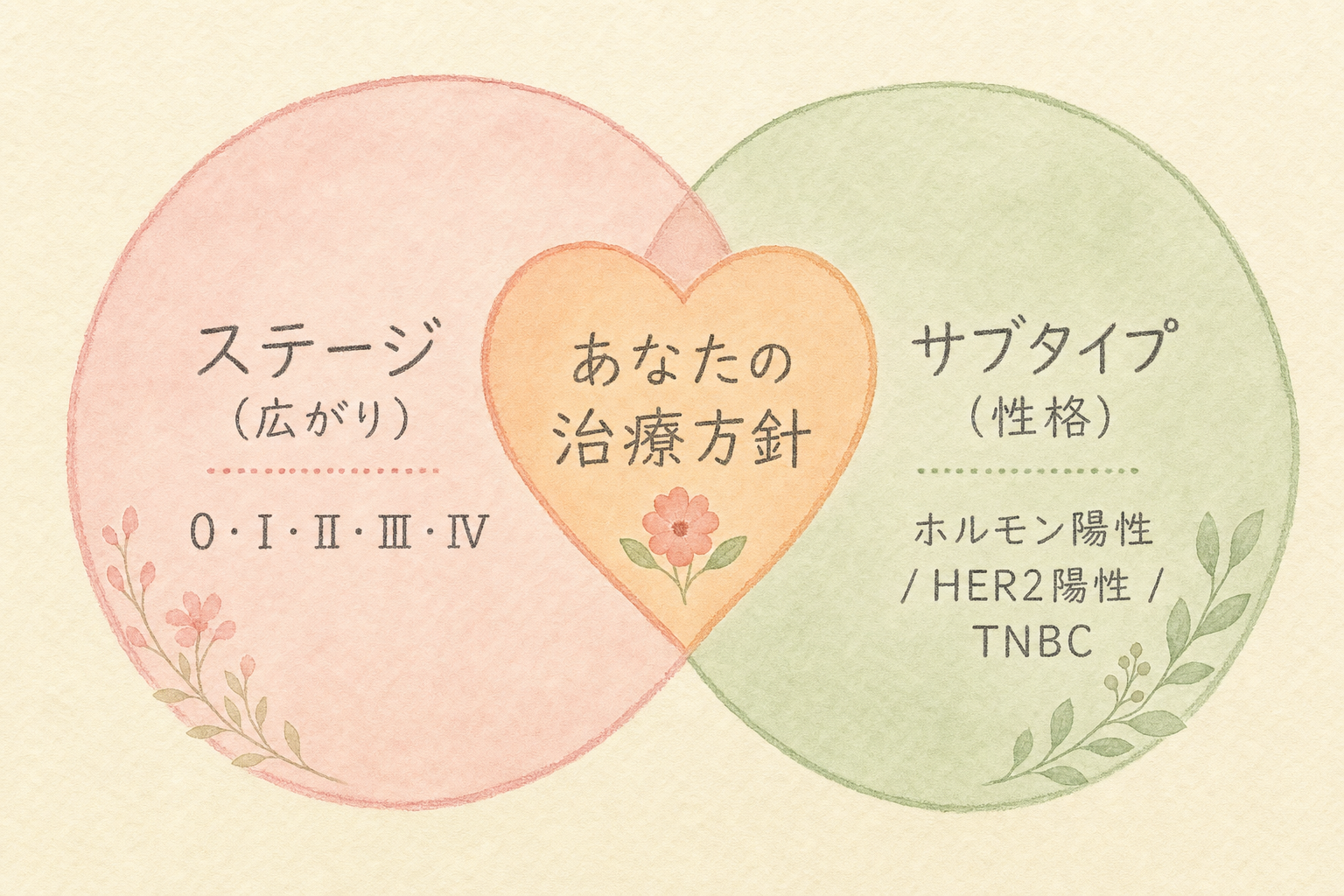
ざっくり言うと、こんな分担です。
ステージとサブタイプの役割
- ステージ:いまどこまで広がっているか → 治療の規模・順番・予後を決める
- サブタイプ:どんな性格のがんか → 効く薬・治療の中身を決める
- 両方を合わせて、あなただけの治療計画ができる
「ステージⅡです」と聞いたら、次は「サブタイプ」を確認しましょう。両方が分かると、治療の見通しが立てやすくなります。
※この記事は一般的な医学情報です。実際の治療方針は、病状、検査結果、体調、価値観によって異なります。必ず主治医と相談してください。